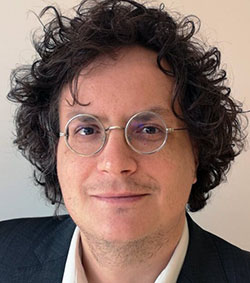
Sergey Gorinsky | IMDEA Networks Institute, Madrid |
Friday, November 12, 2021 | 14:00 (CET, 13:00 UTC) | S.0.05
Abstract:
Content delivery networks (CDNs) distribute much of the Internet content by caching and serving the objects requested by users. A major goal of a CDN is to maximize the hit rates of its caches, thereby enabling faster content downloads to the users. Content caching involves two components: an admission algorithm to decide whether to cache an object and an eviction algorithm to decide which object to evict from the cache when it is full. In this paper, we focus on cache admission and propose an algorithm called RL-Cache that uses model-free reinforcement learning (RL) to decide whether or not to admit a requested object into the CDN’s cache. Unlike prior approaches that use a small set of criteria for decision making, RL-Cache weights a large set of features that include the object size, recency, and frequency of access. We develop a publicly available implementation of RL-Cache and perform an evaluation using production traces for the image, video, and web traffic classes from Akamai’s CDN. The evaluation shows that RL-Cache improves the hit rate in comparison with the state of the art and imposes only a modest resource overhead on the CDN servers. Further, RL-Cache is robust enough that it can be trained in one location and executed on request traces of the same or different traffic classes in other locations of the same geographic region.
Bio:
Sergey Gorinsky is a tenured Research Associate Professor at IMDEA Networks Institute in Madrid, Spain. He joined the institute in 2009 and leads the NetEcon (Network Economics) research group there. Dr. Gorinsky received his Ph.D. and M.S. degrees from the University of Texas at Austin, USA in 2003 and 1999 respectively and Engineer degree from Moscow Institute of Electronic Technology, Zelenograd, Russia in 1994. From 2003 to 2009, he served on the tenure-track faculty at Washington University in St. Louis, USA. In 2010-2014, Dr. Gorinsky was a Ramón y Cajal Fellow funded by the Spanish Government. Sergey Gorinsky graduated four Ph.D. students. The areas of his primary research interests are computer networking, distributed systems, and network economics. His work appeared at top conferences and journals such as SIGCOMM, CoNEXT, INFOCOM, Transactions on Networking, and Journal on Selected Areas in Communications. He served as a TPC chair of ICNP 2017 and other conferences, as well as a TPC member for a much broader conference population. Sergey Gorinsky contributed to conference organization in many roles, such as a general chair of SIGCOMM 2018 and ICNP 2020. He also served as an evaluator of research proposals and projects for the European Research Council (ERC StG), European Commission (Horizon 2020, FP7), COST Association, and numerous other funding agencies.


Bio: Laura Toni received the M.S. and Ph.D. degrees, both in electrical engineering, from the University of Bologna, Bologna, Italy, in 2005 and 2009, respectively. In 2007, she was a Visiting Scholar at the University of California at San Diego (UCSD), San Diego, CA, USA, and since 2009, she has been a frequent visitor to the UCSD, working on media coding and streaming technologies. Between 2009 and 2011, she was with the Tele-Robotics and Application Department, Italian Institute of Technology, investigating wireless sensor networks for robotics applications. In 2012, she was a Postdoctoral Fellow at UCSD, and between 2013 and 2016, she was a Postdoctoral Fellow in the Signal Processing Laboratory (LTS4) at École Polytechnique Fédérale de Lausanne, Lausanne, Switzerland. Since July 2016, she has been a Lecturer in the Electronic and Electrical Engineering Department, University College London (UCL), U.K. Her research mainly involves interactive multimedia systems, decision-making strategies under uncertainty, large-scale signal processing, and communications. She received the UCL Future Leadership Award in 2016, the ACM Best 10% Paper Award in 2013, and the IEEE/IFIP Best Paper Award in 2012.
Bio: Lucia D’Acunto received her PhD in 2012 from Delft University of Technology, the Netherlands, with a thesis on video streaming over peer-to-peer networks. She now works as a senior research scientist at TNO, focusing on video distribution and on the impact of future internet architectures (e.g. ICN, SDN and 5G) on it. She has led and is leading various European research projects on these topics, most notably the open call projects from the European Projects TRIANGLE, 5GINFIRE and FLAME. Since 2016, Lucia is an active participant and contributor to the 3GPP SA4 group, which focusses on mobile and 5G standardization for media applications. Lucia also serves in the organizing committees of several international conferences, usually in the roles of program chair or demo chair, and in the program committees. Lucia also regularly advises European operators on network and TV technologies and contributes to 5GPPP and NEM visions on the 5G Media Vertical and pilots. Lucia has published her research in several papers and journals and holds more than 15 patent applications.